The History of Ornithology
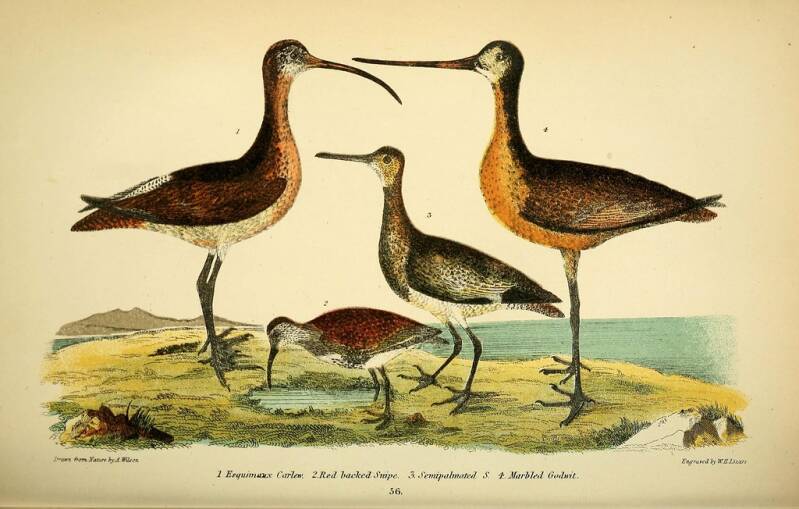
Ornithology, the scientific study of birds, has a history stretching back thousands of years, evolving from simple observations of birds in daily life to a sophisticated scientific discipline involving genetics, satellite tracking, and conservation biology. Birds have fascinated humans because of their beauty, songs, migrations, and mysterious powers of flight, and this fascination laid the groundwork for ornithology.
The earliest roots of ornithology lie in ancient civilizations. Humans undoubtedly observed birds long before written history, noting their behavior for hunting, agriculture, and religious symbolism. In ancient Egypt, birds such as ibises, falcons, and vultures played important roles in religion and iconography. The falcon-headed god Horus symbolized kingship and power. Likewise, birds appeared prominently in the myths and art of ancient Greece and Rome.
The first substantial written studies of birds emerged in ancient Greece. Around 350 BCE, the Greek philosopher Aristotle produced one of the earliest systematic examinations of animals in his work Historia Animalium. Aristotle described approximately 170 bird species and made observations on migration, breeding, and anatomy. Although some of his conclusions were incorrect—he believed, for example, that swallows hibernated in winter—his careful observations established a foundation for later scientific inquiry.
During the Middle Ages, ornithological knowledge progressed slowly in Europe, though falconry contributed greatly to understanding birds of prey. Nobles who practiced falconry learned much about raptor behavior, breeding, and training. A remarkable contribution came from Holy Roman Emperor Frederick II in the 13th century. His book De Arte Venandi cum Avibus (“The Art of Hunting with Birds”) contained surprisingly modern observations about bird anatomy and behavior and rejected many myths common at the time.
The Renaissance revived interest in the natural world. Explorers brought back reports and specimens of unfamiliar birds from Asia, Africa, and the Americas. Naturalists began producing illustrated books describing bird species. In the 16th century, Swiss naturalist Conrad Gesner included birds in his encyclopedic Historiae Animalium, while English naturalists such as William Turner and Francis Willughby helped move ornithology toward a more scientific footing.
A major turning point came in the 18th century with Swedish botanist and zoologist Carl Linnaeus, who introduced the binomial system of scientific naming still used today. Linnaeus classified birds systematically, assigning each species a two-part Latin name, such as Turdus migratorius for the American Robin. This standardized naming system allowed ornithologists worldwide to communicate more effectively.
The 19th century is often considered the golden age of ornithology. Exploration flourished, and naturalists traveled widely collecting specimens. John James Audubon became famous for The Birds of America, a monumental work featuring life-sized illustrations of North American birds. Although Audubon often shot birds to paint them, his artistic and scientific achievements transformed public appreciation of avian diversity.
At the same time, museums expanded their bird collections dramatically. Scientists increasingly emphasized comparative anatomy, distribution, and taxonomy. Charles Darwin’s observations of finches in the Galápagos Islands contributed to his theory of evolution by natural selection, forever changing ornithology. Birds became powerful evidence for evolutionary adaptation.
In the early 20th century, ornithology shifted from collecting dead specimens to studying living birds in the field. Improved binoculars and field guides encouraged amateur birdwatching. The publication of Roger Tory Peterson’s field guide in 1934 revolutionized bird identification by introducing simplified visual clues rather than technical descriptions.
Technological advances transformed ornithology after World War II. Bird banding revealed migration routes, radar uncovered nocturnal migration, and sound recording enabled detailed studies of bird songs. Satellite transmitters and geolocators now track birds across continents and oceans, revealing astonishing migrations once unimaginable.
Modern ornithology increasingly focuses on ecology and conservation. Habitat loss, climate change, invasive species, and collisions with human-made structures threaten many bird populations. Citizen science projects such as bird counts and online databases allow ordinary birders to contribute valuable information to research. Genetic analysis has also reshaped bird classification, uncovering unexpected evolutionary relationships.
Today, ornithology is a vibrant blend of traditional natural history and cutting-edge science. Yet its heart remains unchanged from Aristotle’s day: the careful observation of birds and a deep curiosity about how they live. From ancient myths to satellite tracking, the history of ornithology reflects humanity’s enduring fascination with the avian world.