Bird Communities
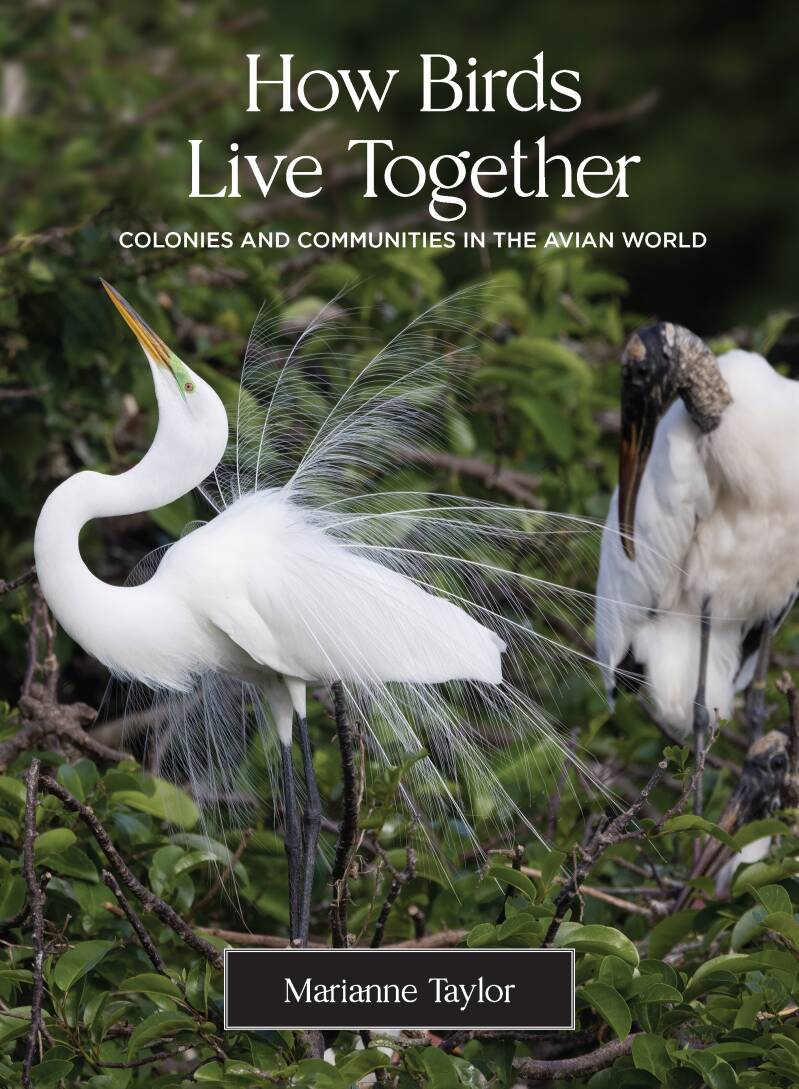
Avifaunal communities—the assemblages of bird species co-occurring in a given place and time—are structured by a complex interplay of historical, ecological, and behavioral processes. At their core, these communities reflect how species partition resources, respond to environmental gradients, and interact with one another across spatial and temporal scales. For an ornithologist, they offer a window into broader ecological principles such as niche differentiation, succession, and biogeographic history.
One of the primary determinants of avifaunal community structure is habitat. Vegetation type, vertical stratification, and structural complexity strongly influence which species are present. In a temperate deciduous forest, for instance, one can observe clear vertical partitioning: canopy specialists such as warblers (e.g., Setophaga spp.) forage among the upper foliage, midstory species like vireos (Vireo spp.) occupy intermediate layers, and understory birds such as thrushes (e.g., Catharus spp.) and wrens exploit lower strata. This vertical segregation reduces direct competition and allows a relatively high diversity of insectivorous birds to coexist within a confined area. In contrast, grassland communities tend to exhibit more horizontal partitioning, with species differing in territory size, vegetation height preference, and nesting strategies.
Resource availability—particularly food—further refines community composition. Seasonal fluctuations in insect abundance, fruiting phenology, or seed production can dramatically alter the presence and behavior of species. Migratory birds, in particular, are tightly linked to these temporal resource pulses. Neotropical migrants arriving on North American breeding grounds often coincide with peaks in arthropod biomass, and subtle mismatches in timing due to climate change are increasingly recognized as a source of demographic stress. Within communities, dietary specialization versus generalization also plays a role. Specialists, such as crossbills (Loxia spp.) adapted to specific conifer seeds, may dominate under certain conditions but are vulnerable to resource fluctuations, whereas generalists can buffer environmental variability and often persist in disturbed habitats.
Competition, both interspecific and intraspecific, has historically been viewed as a central organizing force in avifaunal communities. Classic studies, such as Robert MacArthur’s work on warblers in northeastern coniferous forests, demonstrated how closely related species can coexist by subtly differing in foraging location and behavior. While modern perspectives recognize that competition may be less pervasive than once thought, particularly in highly dynamic or resource-rich systems, it remains an important mechanism in shaping community boundaries and species distributions. Territoriality, for example, can limit population densities and influence spacing patterns within a habitat.
Predation and parasitism also contribute to community structure, often in indirect ways. The presence of avian or mammalian predators can influence habitat selection, nesting behavior, and even vocalization patterns. Ground-nesting species in open habitats may cluster in areas with lower predator density or adopt synchronized breeding to dilute predation risk. Brood parasitism, as seen in species like the Brown-headed Cowbird (Molothrus ater), can have profound effects on host populations and, by extension, on community composition, particularly in fragmented landscapes where parasitism rates are elevated.
Disturbance regimes—whether natural, such as fire and storms, or anthropogenic, such as logging and urbanization—play a crucial role in shaping avifaunal communities over time. Early successional habitats created by disturbance often support a distinct suite of species adapted to open or shrubby conditions, while mature forests harbor different assemblages. The resulting mosaic of habitat patches can enhance regional diversity (beta diversity), even if local diversity (alpha diversity) within any single patch is lower. However, human-induced disturbances often simplify habitats, favoring a subset of adaptable, generalist species at the expense of specialists, leading to biotic homogenization.
Biogeographic history and evolutionary lineage also leave a strong imprint on avifaunal communities. Continental drift, glaciation events, and historical climate fluctuations have shaped species pools from which local communities are drawn. Island communities, for example, often exhibit high levels of endemism and ecological release, where species expand their niches in the absence of competitors. In contrast, continental communities tend to be more saturated with species, leading to finer niche partitioning.
Spatial scale is critical when considering avifaunal communities. At a local scale, one might focus on species interactions within a single forest stand, whereas at a landscape or regional scale, patterns of habitat connectivity, dispersal, and metapopulation dynamics become more relevant. Migratory connectivity adds another layer of complexity, linking breeding, stopover, and wintering communities across continents. A species’ role in one community may differ markedly from its role in another, depending on local ecological conditions.
Finally, avifaunal communities are dynamic rather than static entities. Climate change, land-use alteration, and other global pressures are driving shifts in species distributions, phenology, and interactions. Some communities are experiencing turnover as new species colonize and others decline or disappear. Long-term monitoring and increasingly sophisticated analytical tools—such as network analysis and functional trait approaches—are enhancing our ability to understand these changes.
In sum, avifaunal communities are shaped by a rich tapestry of ecological processes operating across multiple scales. Their study not only deepens our understanding of birds themselves but also provides broader insights into the functioning and resilience of ecosystems.