Do Birds Enjoy Singing?
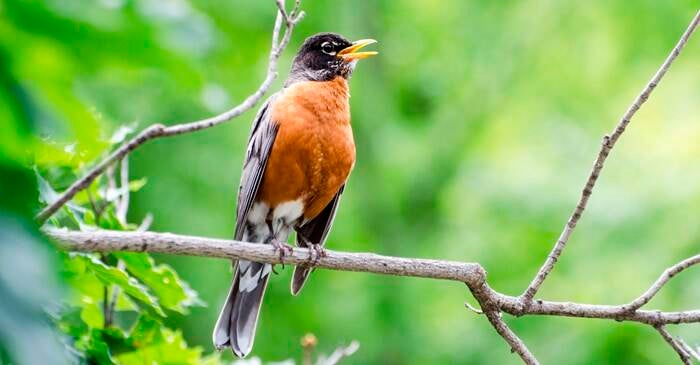
Bird song is one of the most celebrated features of the natural world, often described in human terms as joyful, expressive, even musical in intent. People often interpret bird song as an enjoyable activity, as it is for people, but for birds themselves, singing is not about pleasure. It is a highly refined evolutionary adaptation shaped by natural selection, serving critical functions tied directly to survival and reproductio.n
At its core, bird song is a signaling system. The two primary functions—territory defense and mate attraction—are so consistent across taxa that they form the foundation of nearly all modern interpretations of avian vocal behavior. A singing male is not “expressing happiness,” but broadcasting information: this space is occupied, and I am fit enough to defend it. In many species, especially among passerines, territory quality is directly linked to reproductive success. A male that can secure and maintain a high-quality territory—rich in food resources and nesting sites—has a higher chance of attracting a female and successfully raising offspring. Song functions as an efficient, low-risk way to advertise territorial ownership without resorting to costly physical conflict.
Equally important is the role of song in sexual selection. Females often assess males based on song characteristics such as repertoire size, complexity, frequency range, and performance consistency. These features are not arbitrary. They are honest signals of neurological development, physical condition, and even genetic quality. For example, in species like the Song Sparrow (Melospiza melodia), males with larger repertoires tend to achieve greater reproductive success. The ability to learn and produce complex songs requires both developmental stability and sustained energetic investment—traits that females can exploit as indicators of fitness. Thus, song is not an aesthetic display for its own sake; it is a functional advertisement shaped by the pressures of mate choice.
The physiological cost of singing further reinforces its adaptive significance. Singing is energetically expensive, particularly during the breeding season when males may sing for hours at dawn and dusk. This expenditure occurs at a time when energy demands are already high due to territory defense, courtship, and sometimes parental care. Moreover, singing increases predation risk. A vocalizing bird reveals its location not only to rivals and potential mates, but also to predators. From an evolutionary standpoint, such costly behavior would not persist unless it conferred substantial fitness benefits. The persistence of elaborate song across so many lineages is therefore strong evidence of its adaptive value.
The structure and timing of song also reflect ecological pressures. The well-known “dawn chorus” is not a spontaneous outpouring of avian exuberance, but a strategic use of environmental conditions. Early morning typically offers optimal acoustic transmission—cool, still air allows sound to travel farther and with less degradation. Light levels are often too low for effective foraging, making singing a productive use of time. By maximizing signal transmission while minimizing opportunity cost, birds enhance the efficiency of their communication.
People Learning adds another layer of evolutionary complexity. Many songbirds acquire their vocalizations through a sensitive period early in life, memorizing and later reproducing the songs of conspecific adults. This cultural transmission allows for local dialects, which can influence mate choice and territorial interactions. Yet even this learned component is under genetic control; the capacity for song learning, the timing of sensitive periods, and the neural architecture involved are all products of evolutionary history. In species that do not learn their songs, such as many suboscines, vocalizations are innate but still serve the same fundamental adaptive purposes.
It is tempting, from a human perspective, to interpret bird song as an expression of pleasure. The aesthetic appeal is undeniable, and in some cases birds may experience internal states that reinforce singing behavior. However, these proximate mechanisms—neural rewards, hormonal influences—exist because they support behaviors that enhance fitness. The ultimate explanation remains evolutionary: birds sing because individuals that sang effectively were more likely to survive, secure territories, attract mates, and pass on their genes.
In this light, bird song is not music for its own sake, but a finely tuned instrument of survival—one of the most elegant examples of how natural selection can shape behavior into something both functional and, to human ears, profoundly beautiful.