Bird Houses

European Robin, Erithacus rubecula
Most of us would like to attract birds to our domicile. There are several ways to improve your backyard or patio or whatever space you have outside. You can use bird seed, with or without a feeder, add a birdbath, or add a birdhouse or two. Birds that might use a birdhouse are "cavity nesters", that is, in the wild, left to their own devices they will find a cavity/hole in a live or dead tree, and between rocks. They also may make use of human structures, nesting in light fixtures, gutter ends, the spaces between roof tiles, and under eves. Woodpeckers often provide the cavities in both live and dead trees, but they also make holes in fence posts that can be used by cavity-nesting birds. Birdhouses are often also used by birds for protection against the weather, not always for nesting.
With the wooden material used for fences being replaced by metal or fiberglass, fence post holes are disappearing. Snags, dead trees, are often felled because some people feel the trees pose a danger of falling. So to replace those disappearing cavities, many people, for many years, have constructed bird houses of varying types. Some are simple, small , one holed wooden structures, but others become very large and ornate and some have multiple entry holes.
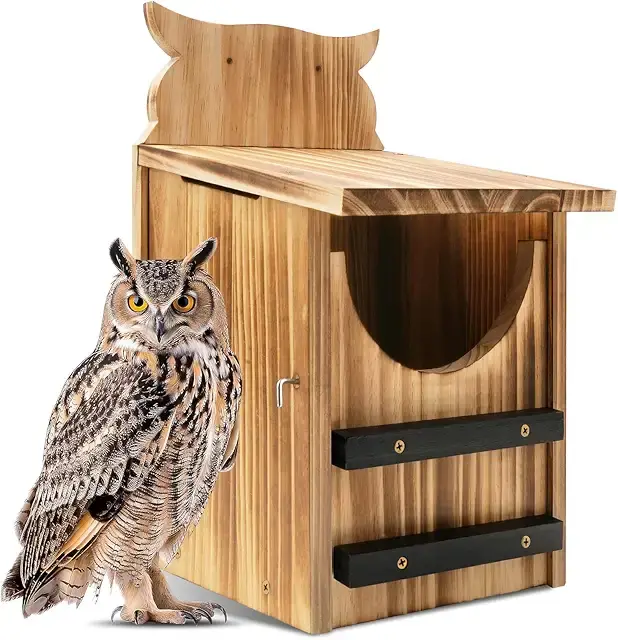
Let me say one thing before we look at some possible choices of bird homes: birds are not particularly fussy about their domicle. You can read about bluebird boxes that should be 1.5 inches in diameter. And for the Screech Owl: "The entrance hole is 3" round and placed 9" above the floor of the box. The box is 14" deep with a floor area 10" wide by 11-3/4" tall." That's according to the Wildlife Center of VIrginia. My question is, what did these birds do before people started building nestboxes or birdhouses for them? They found some perfectly suitable place, of course.
But I have to add some caveats. First, with the disappearance of habitats, it is certainly helpful to provide homes for birds. Many bird populations are limited by having an insufficient number of suitable cavities provided by nature. Second, there are certain characteristics of particular birdhouses that make them especially suitable for a particular bird species. Again, the bluebird. The hold can be almost any size rather than 1.5 inches in diameter, but that particular measurement prevents European Starlings from usurping that home. And if you continue to read about the Easern Screech Owl box, the instructions tell you to cut a series of grooves under the nestbox hole inside the box to help the nestlings to climb out.
Rather than me repeating all the good information that's out there on the Web, you can go to a site like that of the National WIldlife Federation that give you information the best designs for a number of species of cavity nesters. As that site notes, there are about 85 cavity nesters in North America, but only about three dozen tend to use artificial bird houses. Birds and Blooms provides information as well.
There are lots of birdhouses you can buy and there are lots of plans you can use to construct your own birdhouses. Even if you are not very handy, like me, you can use a simple birdhouse plan with minimal materials, to make your own.
🏠 1. Traditional Nest Box (Single Compartment)
Most common type
Fully enclosed with one entrance hole
Hole size determines species
Attracts bluebirds, chickadees, wrens, titmice
Best mounted on poles or trees
👉 Ideal for cavity-nesting songbirds.
🐦 2. Platform Nest Box (Open Front)
Open front or shallow roof
Provides support rather than enclosure
Attracts robins, phoebes, barn swallows
👉 Good under eaves or sheltered walls.
🐦 3. Multi-Compartment (Colony) House
Multiple nesting chambers
Designed for colonial nesters
Most commonly used for purple martins
👉 Requires monitoring and maintenance.
🦉 4. Large Nest Box (For Bigger Birds)
Larger interior space
Bigger entrance hole
Used by screech owls, kestrels, wood ducks
👉 Often mounted higher or near water depending on species.
🧺 5. Decorative Birdhouse
Designed for visual appeal
May not meet wildlife safety standards
Often lacks proper ventilation or drainage
👉 Great for garden décor, but not always functional.
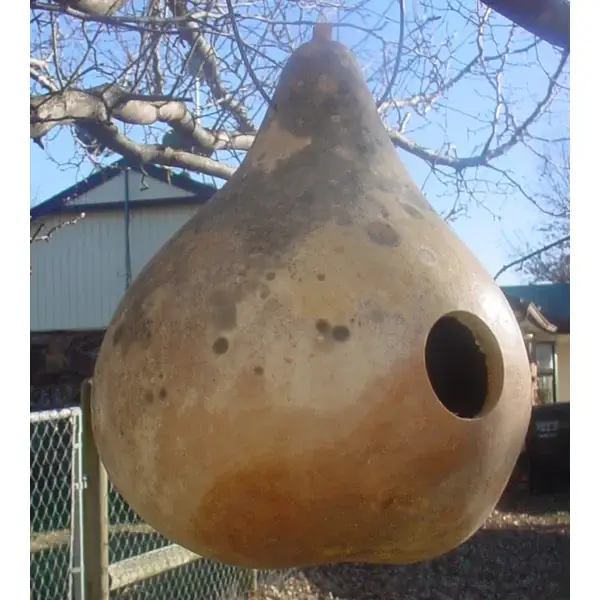
🌾 6. Natural or Alternative Material Houses
Made from gourds, bamboo, or woven materials
Often used for martins or wrens
Can blend well into landscapes