Avian Species and Speciation
The Concept of Species as It Applies to Birds
The concept of species is one of the most fundamental ideas in biology, helping scientists classify and understand the diversity of life. In birds, defining a species is both important and challenging because different bird populations often show variation in appearance, behavior, and genetics. Ornithologists use several approaches to determine whether two groups of birds belong to the same species or represent distinct species. These approaches have evolved over time as scientific knowledge and technology have improved.
The most widely known definition is the Biological Species Concept, proposed by evolutionary biologist Ernst Mayr. According to this concept, a species is a group of organisms that can interbreed naturally and produce fertile offspring while being reproductively isolated from other such groups. In birds, this means that individuals of the same species are capable of mating successfully in the wild and producing offspring that can also reproduce. Reproductive isolation may occur because of differences in mating behavior, breeding seasons, habitats, or geographic barriers. For example, two closely related bird populations may appear similar but never interbreed because they occupy different ecological niches or have distinct courtship songs.
However, the Biological Species Concept has limitations when applied to birds. Many bird species occasionally hybridize, producing viable offspring. Examples include various species of ducks, gulls, and hummingbirds. These hybrids demonstrate that reproductive barriers are not always complete. Despite occasional hybridization, the parent species often maintain distinct identities because hybrid offspring may be less successful or because interbreeding occurs only rarely. Therefore, reproductive isolation in birds is often viewed as a matter of degree rather than an absolute condition.
Another important approach is the Morphological Species Concept, which classifies species based on physical characteristics such as size, plumage, beak shape, and skeletal features. This method has historically been useful because it allows scientists to identify species from museum specimens and fossils. In birds, plumage coloration and body structure are often key identifying features. However, relying solely on morphology can be misleading because males and females may look very different, juvenile birds often differ from adults, and unrelated species may evolve similar appearances through convergent evolution.
The Phylogenetic Species Concept has gained increasing importance with advances in molecular biology. Under this concept, a species is the smallest group of organisms sharing a common ancestor and possessing unique evolutionary characteristics. DNA sequencing enables researchers to compare genetic differences among bird populations and determine their evolutionary relationships. This approach has led to the recognition of many previously overlooked bird species, especially among tropical birds where subtle physical differences conceal significant genetic divergence. As a result, bird taxonomy has undergone numerous revisions in recent decades.
Bird vocalizations and behavior also play significant roles in species recognition. Many birds rely on species-specific songs to attract mates and defend territories. Even when two populations appear nearly identical, differences in song may prevent interbreeding. Likewise, variations in courtship displays, nesting behavior, or migration patterns can contribute to reproductive isolation. Consequently, ornithologists often combine behavioral evidence with genetic and morphological data when determining species boundaries.
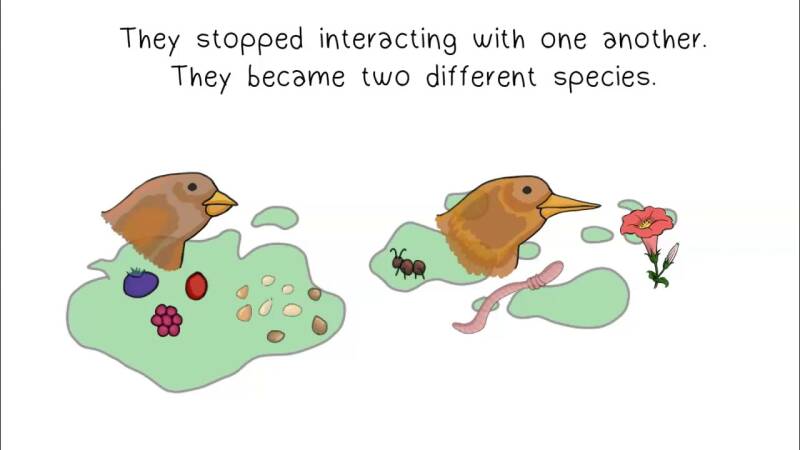
Geographic isolation is another important factor in bird speciation. Populations separated by mountains, oceans, deserts, or other barriers may gradually evolve independently through natural selection and genetic drift. Over time, accumulated differences may result in the formation of new species. Islands provide classic examples of this process. Birds that colonize isolated islands frequently evolve into distinct species adapted to local environmental conditions, illustrating how geographic separation promotes biodiversity.
Modern ornithology increasingly adopts an integrative approach to species classification. Rather than relying on a single definition, scientists evaluate multiple lines of evidence, including genetics, morphology, vocalizations, ecology, behavior, and reproductive compatibility. This comprehensive method provides a more accurate understanding of avian diversity and evolutionary history.
The species concept is also important for bird conservation. Conservation laws often protect species recognized by scientific classification. If a distinct population is identified as a separate species, it may receive legal protection and targeted conservation efforts. Accurate species identification therefore influences conservation priorities, habitat management, and biodiversity assessments.
In conclusion, the concept of species in birds is more complex than a simple definition based on appearance or the ability to interbreed. Biological, morphological, phylogenetic, behavioral, and ecological evidence all contribute to understanding species boundaries. As genetic technologies continue to advance, scientists gain deeper insights into the evolutionary relationships among birds, leading to refined classifications and improved conservation strategies. The study of bird species remains a dynamic field that reflects the complexity and diversity of life on Earth.