Competitive Birding
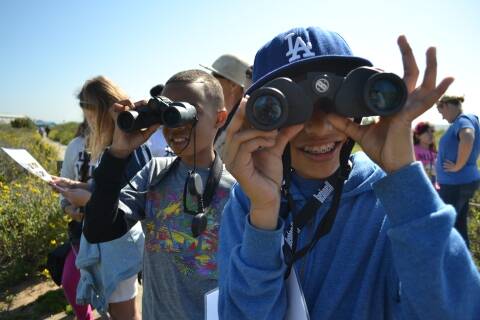
Birding is usually thought of as a quiet, contemplative pursuit: a person with binoculars walking slowly through woods, marshes, or grassland, listening for songs and watching for movement in the leaves. Yet birding also has a surprisingly vigorous competitive side. Competitive birding turns the search for birds into a race against time, geography, weather, fatigue, and other birders. It can be exhilarating, obsessive, exhausting, and, at its best, a powerful force for conservation.
The most familiar form is the “Big Day,” in which individuals or teams try to identify as many bird species as possible within a 24-hour period. A Big Day may be conducted in a county, state, country, or even across a continent. Success depends on much more than luck. Top teams plan routes with military precision, scouting locations ahead of time, studying tide charts, sunrise and sunset times, migration patterns, and recent rarity reports. They know where owls are likely to call before dawn, where shorebirds gather at low tide, where raptors may appear once thermals rise, and where nocturnal migrants might drop into isolated patches of habitat.
Another popular form is the “Big Year,” in which a birder attempts to see as many species as possible within a calendar year in a defined area. A serious Big Year can become a logistical marathon. Participants may chase a rare warbler across several states, fly overnight for a seabird blown inland by a storm, or drive hundreds of miles for a single vagrant. The contest rewards stamina, money, flexibility, and deep knowledge of bird distribution. It also reveals how unpredictable birds can be. A species expected in one place may fail to appear, while an unexpected rarity can suddenly change the rankings.
Competitive birding has its own ethics. Since bird identification is usually based on personal observation, trust is essential. Most competitions require birds to be identified by sight or sound, and unusual records may need documentation. Playback, trespassing, disturbance of nesting birds, and crowding sensitive species are discouraged or prohibited. The best competitive birders understand that winning is never worth stressing a bird, damaging habitat, or disrespecting private property.
One of the most positive aspects of competitive birding is fundraising. Birdathons, in which teams collect pledges for every species found, have raised substantial sums for land trusts, nature centers, bird observatories, and conservation groups. In these events, the competitive urge is harnessed for a larger purpose. The more species found, the more money flows toward habitat protection, education, and research.
Competitive birding also sharpens skills. A birder on a Big Day cannot linger over every sparrow. Identification must often be rapid: a chip note, a wing pattern, a silhouette, a brief flight call overhead. Participants learn seasonality, habitat preference, molt, vocal variation, and the tiny differences between similar species. They also develop an intimate sense of place. To compete well, one must know not just birds, but landscapes.
Still, competitive birding is not for everyone. It can reduce birds to numbers and turn a living creature into a tick on a checklist. But for many participants, the competition adds urgency and excitement without diminishing wonder. At dawn, hearing the first owl call or watching shorebirds lift from a mudflat, even the most competitive birder is reminded that the real prize is not the total at day’s end, but the birds themselves.