The History of Birdwatching
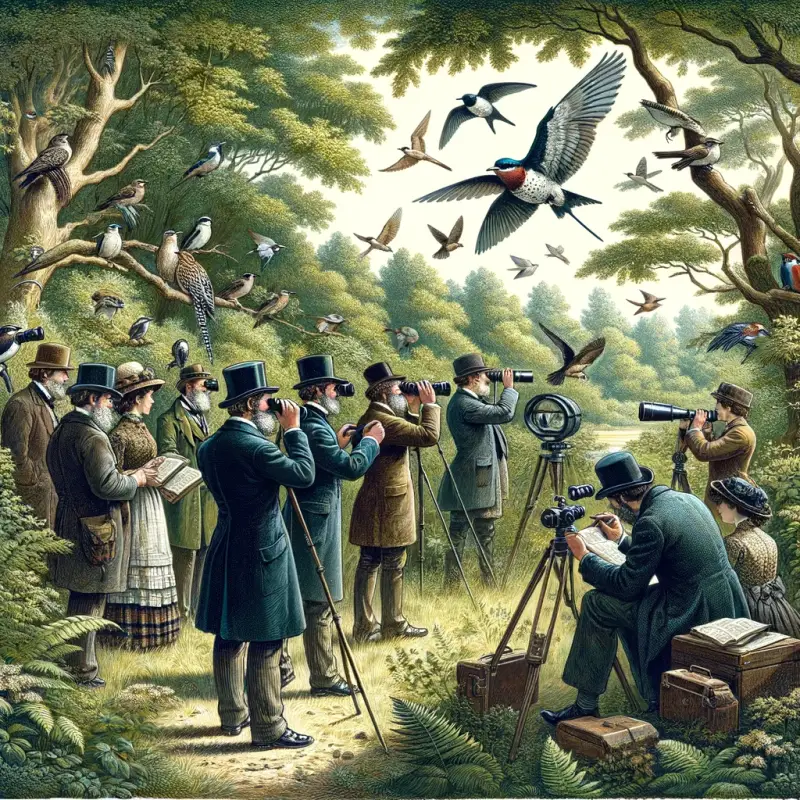
The pastime and science of birdwatching have deep roots stretching back centuries, evolving from hunting and collecting to binoculars and bird lists. Today, millions of people around the world identify as birdwatchers—or birders—but the hobby’s history reflects changing attitudes toward nature, technology, and conservation.
People have always noticed birds. Early humans depended on them for food, weather signs, and symbolism. Ancient civilizations recorded birds in myths, religion, and practical observations. In ancient Egypt, birds appeared in hieroglyphs and spiritual beliefs; the ibis, falcon, and vulture had sacred importance. Greek philosophers such as Aristotle observed bird migration and behavior, although some conclusions were incorrect. Aristotle famously suggested that swallows hibernated in mud during winter, an idea repeated for centuries.
For much of history, however, observing birds meant collecting them. From the Renaissance through the nineteenth century, naturalists studied birds primarily by shooting specimens. Ornithology and birdwatching were not separate pursuits. Wealthy collectors amassed cabinets of skins, eggs, and mounted birds. Explorers traveled widely gathering specimens for museums and scientific study. This period produced magnificent illustrated works, including those by John James Audubon, whose monumental Birds of America (1827–1838) combined art with scientific ambition. Yet Audubon, like most ornithologists of his era, studied birds largely through collecting.
The nineteenth century brought several changes that laid the foundation for modern birdwatching. Industrialization and urbanization made nature observation appealing to city dwellers seeking recreation. At the same time, advances in optics slowly improved field glasses, making distant observation more practical. Popular natural history books introduced ordinary people to birds, encouraging appreciation rather than possession.
A turning point came in the late 1800s with a reaction against the mass killing of birds for fashion. Women’s hats decorated with feathers and entire stuffed birds drove extensive slaughter, especially of egrets and songbirds. Conservationists responded by forming organizations dedicated to bird protection. In the United States, the National Audubon Society emerged from anti-plumage campaigns and helped reshape public attitudes. Birds increasingly came to be admired alive rather than collected dead.
One of the most important milestones occurred in 1901, when Frank Chapman proposed the first “Christmas Bird Census.” Instead of the traditional Christmas side hunt, in which participants competed to kill animals, observers counted living birds. The census continues today as the world’s longest-running citizen science project and remains a cornerstone of bird monitoring.
Technology transformed birdwatching in the twentieth century. Better binoculars after World War I made field identification far easier. Compact field guides revolutionized the hobby. In 1934, Roger Tory Peterson published A Field Guide to the Birds, introducing a system of arrows and simplified illustrations that allowed people to identify birds quickly in the field. Peterson’s guide democratized birdwatching, moving it beyond scientists and wealthy enthusiasts to ordinary amateurs.
Birdwatching grew rapidly after World War II. Increased leisure time, automobile travel, and expanding protected lands encouraged participation. Bird clubs formed across North America and Europe. Competitive listing—the practice of recording species seen—became popular, with birders pursuing “life lists” and regional totals. Rare bird alerts and organized bird counts fostered strong communities.
By the late twentieth century, birdwatching became increasingly global and technologically sophisticated. Spotting scopes, portable cameras, and sound recording devices improved observation. The rise of ecotourism led birders to remote destinations from the Amazon to Antarctica in search of unusual species. Computerized databases allowed bird sightings to be shared instantly.
The digital era has transformed birdwatching yet again. Platforms such as eBird, developed by the Cornell Lab of Ornithology, allow birders worldwide to submit observations, generating vast scientific datasets used to study migration, abundance, and conservation. Smartphone apps identify songs, map hotspots, and connect enthusiasts globally.
Today, birdwatching is among the world’s most popular nature hobbies. What began as curiosity, collection, and science has evolved into recreation, conservation, and citizen science. Modern birdwatchers contribute meaningfully to research while experiencing one of humanity’s oldest pleasures: watching birds live their lives in the wild.